On-Demand Recording Available — Earn CE at Your Own Pace
Ophthalmology

Advanced Equine Ophthalmology
Management of Corneal, Intraocular & Neuro-Ophthalmic Disorders

Corneal ulcers that fail to heal, recurrent uveitis, and eyelid lacerations that demand prompt management. Spend three focused hours with Dr. Rachel Allbaugh on equine eye cases involving corneal, intraocular, adnexal, orbital, and neuro-ophthalmic disease. She will cover the drug names, doses, and clinical decision points she uses at Iowa State University's Lloyd Veterinary Medical Center.

Clinical Review Date: April 2026RACE #20-1276863Provider ID #50-29055

CE Hours

3.0 Medical CE

Format

Live Webinar

Price

$120 (Standard)

Audience

DVMs & Technicians

Species

Equine

Status

RACE-Approved

Friday, May 8, 2026

2:00 PM ET1:00 PM CT12:00 PM MT11:00 AM PT
3.0 CreditsMedical CERACE Approved

Watch the recording and earn CE credit after a short quiz.

Part of a Bundle

Equine Excellence Series

Advanced equine CE across ophthalmology, cardiology, genetics, and dentistry

$399

6 lectures • 14 CE hrs

View Bundle

Part of a Bundle

Equine Ophthalmology Bundle

Intro + Advanced Equine Ophthalmology with Dr. Rachel Allbaugh, DACVO

$180

2 lectures • 6 CE hrs

View Bundle
RACE-Approved Provider
What You'll Use Monday

Practical Takeaways for Your Practice

Organized clinical detail for the oral examination, common findings, periodontal disease, and referral decisions.

01

Corneal Cases That Won't Behave

Ocular-surface SCC (and the intrastromal form that hides under intact epithelium), bacterial and fungal keratitis, stromal abscesses behind sealed epithelium, melting ulcers, eosinophilic keratitis with its gritty yellow infiltrates, and immune-mediated keratitis. Antimicrobial selection by cytology, voriconazole 1% (stable 28 days refrigerated), fluconazole 14 mg/kg PO load then 5 mg/kg, autogenous serum for melting, and when a conjunctival graft is the only answer.

02

ERU, Glaucoma, and the Lens Decisions

Equine recurrent uveitis the way Allbaugh actually works it up. Ruling out corneal and foreign-body causes before a steroid, aqueous flare in a dark room, tonometry for secondary glaucoma (IOP > 35 mmHg), intravitreal 4 mg preservative-free gentamicin and suprachoroidal cyclosporine implants for recalcitrant cases, and the cataract and retinal detachment conversations worth having early.

03

Eyelids, Orbits, and Nerves

Foal entropion that self-corrects with rehydration vs. the one that needs three vertical mattress sutures. Friesian distichiasis. Ectopic cilia on the posterior third eyelid causing a nonhealing ulcer. Two-layer 3-0 eyelid laceration repair (never amputate a pedicle). Periocular SCC and sarcoid treatment options: cisplatin, BCG, 5-FU, photodynamic therapy. Facial nerve paralysis, Horner's, and the orbital fracture workup.

04

When to Enucleate, and How

The standing-sedation enucleation approach Allbaugh uses. Transpalpebral for infectious and neoplastic surface disease, subconjunctival for end-stage glaucoma or uveitis. Retrobulbar block technique, hemorrhage control, and why only round orbital implants are recommended (conforming 'top hat' implants have much higher complication rates).

Course Abstract

Live Online Interactive Webinar • Case-Based • Sponsor-Free

This is the course for the cases that extend beyond the routine eye exam.

Dr. Rachel Allbaugh covers the progression from initial ophthalmic assessment to the more complex equine eye conditions encountered in referral practice. Across three one-hour sessions, she addresses corneal disease, including SCC, infectious keratitis, stromal abscess, and immune-mediated keratitis; intraocular disease, including ERU, cataracts, glaucoma, retinal detachment, and optic nerve disease; and adnexal, orbital, and neuro-ophthalmic conditions, including entropion, ectopic cilia, distichiasis, eyelid lacerations and neoplasia, dacryocystitis, Horner's syndrome, facial nerve paralysis, and enucleation. The course includes specific drugs, concentrations, dosing intervals, and referral decision points, and draws from more than 70 peer-reviewed publications and Dr. Allbaugh's more than 20 years of academic practice.

Session Agenda

Four one-hour clinical sections with questions after each topic.

1
1:00 PM50 min lecture

Management of Common Equine Corneal Conditions

+ 10 min live Q&A
2
2:05 PM50 min lecture

Management of Frustrating Equine Intraocular Issues

+ 10 min live Q&A
3
3:10 PM50 min lecture

Management of Equine Adnexal, Orbital and Neuro-Ophtho Disorders

All times shown in CTCentralLive Q&A with the presenter after every topicFull recording available on-demand after the session
Reserve your seat →

Curriculum Overview

Three focused lectures. 3.0 RACE-approved CE hours.

01. Management of Common Equine Corneal Conditions

1.0 Hour

Ocular-surface and intrastromal SCC (Haflinger and Belgian predisposition, biopsy to confirm, surgical excision plus adjunctive treatment). Corneal ulceration from simple superficial to melting: fluorescein depth assessment, cytology-guided topical selection (ofloxacin, ciprofloxacin, compounded 5.5% cefazolin, chloramphenicol), systemic flunixin at 1.1 mg/kg BID for reflex uveitis, atropine with colic monitoring, voriconazole 1% and fluconazole for fungal disease, autogenous serum for collagenase activity. Stromal abscess under intact epithelium (steroid-contraindicated). Iris prolapse, eosinophilic keratitis, and the three depths of immune-mediated keratitis. Referral triggers: >50% stromal depth, ruptured globe, nonresponse at 48 hours.

  • Differentiate the presentations of equine corneal disease and choose appropriate diagnostics
  • Select topical and systemic drug combinations based on cytology and clinical findings
  • Manage melting ulcers, stromal abscesses, and immune-mediated keratitis medically
  • Identify the cases that belong with a specialist and call the referral early
02. Management of Frustrating Equine Intraocular Issues

1.0 Hour

Iris stromal hypoplasia vs. a true iris mass (transillumination). Corpora nigra cysts and transcorneal diode laser ablation for horses with head-shaking or performance concerns. Equine recurrent uveitis: Appaloosa and draft predisposition, aqueous flare in the insidious form, tonometry and ocular ultrasound, Leptospira serology and PCR, the topical steroid vs. NSAID decision (dexamethasone 0.1%, prednisolone acetate 1%, bromfenac), atropine for ciliary spasm, intravitreal gentamicin, suprachoroidal cyclosporine, and vitrectomy. Cataract classification and when to refer for phaco. Primary vs. secondary glaucoma, dorzolamide or timolol, diode TSCP. Optic nerve disease table: what's visual, what's blind, what's breeding-ending.

  • Work up equine recurrent uveitis with the right diagnostics before treating
  • Differentiate physiologic variants from clinically significant intraocular disease
  • Select medical and surgical options for ERU, glaucoma, and cataracts
  • Counsel owners realistically on prognosis for chronic intraocular disease

03. Management of Equine Adnexal, Orbital, and Neuro-Ophthalmic Disorders

1.0 Hour

Foal entropion (primary vs. secondary to dehydration), vertical mattress suture placement, why Hotz-Celsus is rarely the right answer in foals. Ectopic cilia on the posterior third eyelid. Distichiasis and the Friesian genetic predisposition. Two-layer eyelid laceration repair with 3-0 suture preserving every pedicle. Eyelid and third-eyelid SCC, periocular sarcoid, and the treatment menu (surgical excision, cisplatin, BCG, 5-FU cream, photodynamic therapy). Dacryocystitis and NLD imaging. Orbital fracture workup. Facial nerve paralysis and Schirmer testing. Horner's syndrome. The two enucleation approaches under standing sedation, hemorrhage management, and orbital implant choice.

  • Manage foal entropion and decide when temporary sutures vs. surgery applies
  • Repair eyelid lacerations preserving margin and pedicles for long-term corneal health
  • Select among surgical, chemotherapeutic, and photodynamic options for periocular neoplasia
  • Execute a standing transpalpebral or subconjunctival enucleation with appropriate blocks

What's Included

Live Q&A

Ask questions in real time

Digital Notes

Downloadable lecture PDFs

Recording Access

Re-watch at your own pace

CE Certificate

RACE-approved, instant download

Included With Registration

Clinical Resources

Downloadable guides and lecture notes to reinforce your learning and apply in practice.

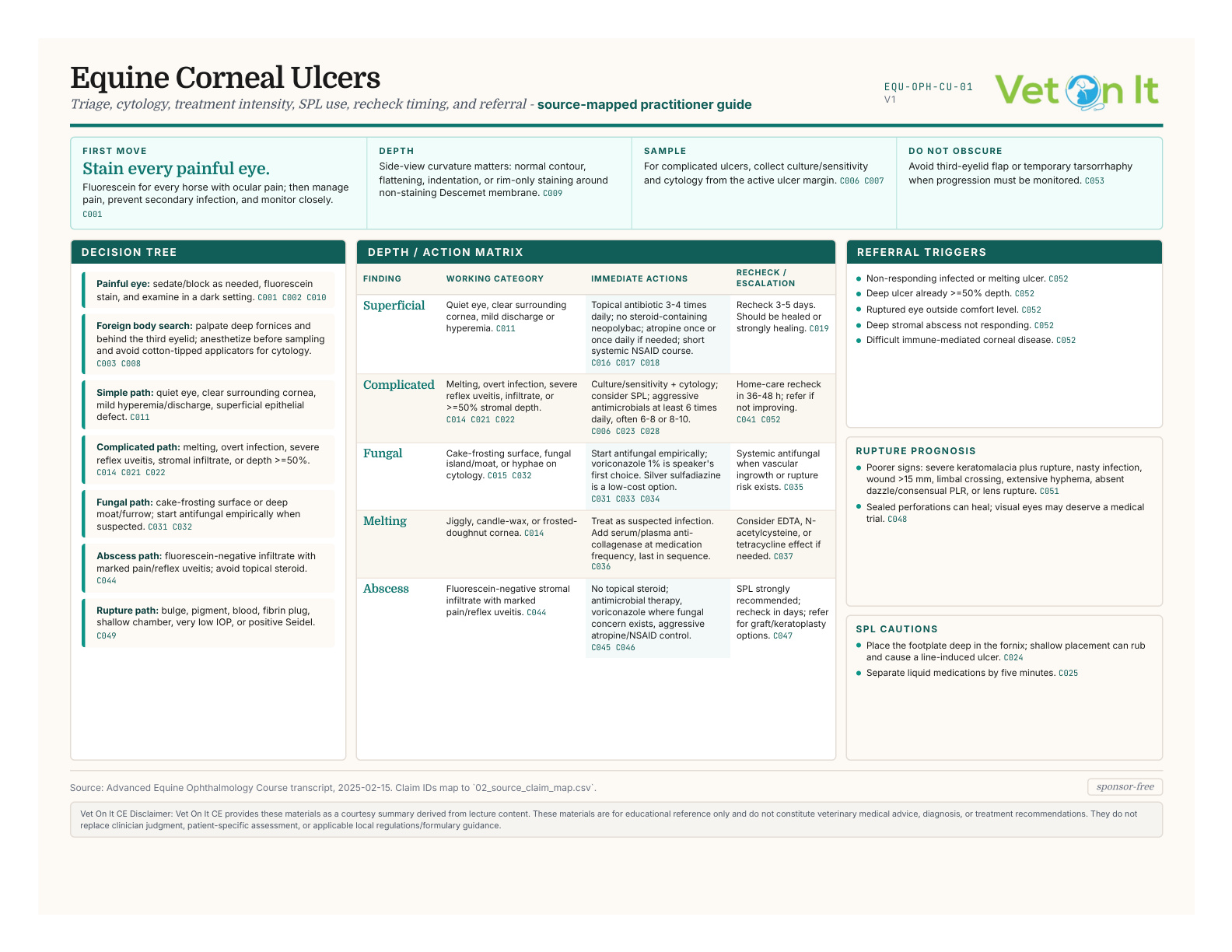
Preview of Equine Corneal Ulcer Clinical Resource
PDF

Equine Corneal Ulcer Clinical Resource

One-page printable reference for equine corneal ulcer assessment and decision support.

Get on-demand access

Available for download immediately after registration in your Course Viewer.

Dr. Rachel Allbaugh

Dr. Rachel Allbaugh, DVM, MS, DACVO

University Logo

Dr. Rachel Allbaugh is a veterinary ophthalmologist and full professor at Iowa State University College of Veterinary Medicine, where she holds the Lora and Russ Talbot Endowed Professorship in Veterinary Medicine. A proud ISU alumna, she earned her BS and DVM degrees (Summa Cum Laude) at Iowa State before completing an internship in North Carolina and a veterinary ophthalmology residency and master's degree at Kansas State University. Board-certified by the American College of Veterinary Ophthalmologists since 2008, she serves as Ophthalmology Service Leader and Residency Program Director at ISU's Lloyd Veterinary Medical Center. Her clinical expertise spans ophthalmic diseases and surgery across dogs, cats, horses, and exotic species — with particular depth in equine ophthalmology, having served as President of the International Equine Ophthalmology Consortium (2020–2022). Dr. Allbaugh has contributed more than 70 peer-reviewed publications and 200 presentations to the field.

Frequently Asked Questions

The Equine Eye Cases That Keep You Up

All tiers include 3.0 RACE-approved CE credits, digital notes, and recording access.
If your schedule changes, you'll still have access to the recording and notes.

Standard

Standard

$120
  • 3.0 Hours Live RACE-Approved CE
  • Interactive Q&A with Dr. Rachel Allbaugh
  • Digital Lecture Notes (PDF)
  • Session Recording Access
  • Official CE Certificate
Enroll Now
Bundle Offer

Equine Excellence Series

Advanced equine CE across ophthalmology, cardiology, genetics, and dentistry

$399

Full series • 14 CE hours • 6 lectures • 3 specialists

  • 12-month VetOnIt subscription
  • Printed lecture notes shipped
  • Commemorative enamel pin (first 100 enrollees)
View the full series →

Includes this lecture plus 5 others

Bundle Offer

Equine Ophthalmology Bundle

Intro + Advanced Equine Ophthalmology with Dr. Rachel Allbaugh, DACVO

$180

Full series • 6 CE hours • 2 lectures • 1 specialists

  • Both ophthalmology lectures
  • 12-month on-demand access to recordings
  • RACE-approved CE certificates
View the full series →

Includes this lecture plus 1 other

Watch the Recording. Earn Your CE.

This lecture is now available on-demand. Watch Dr. Rachel Allbaugh's full 3.0-hour presentation at your own pace and earn RACE-approved CE credit after a short quiz.